Many autistic individuals spend their lives performing not on stage, but in everyday situations. They carefully manage eye contact, mimic facial expressions, rehearse conversations, and suppress stims to appear “normal.”
This is autistic masking: a deliberate or unconscious strategy for blending in with neurotypical expectations, often at great personal cost.
From the outside, autism masking can give the impression that someone is coping well. Internally, it feels like living on high alert. This invisible labour is especially common among autistic women and AFAB individuals, a key reason why many receive late or missed diagnoses.
Over time, masking erodes self-esteem, blurs identity, and fuels anxiety, autistic burnout, and depression.
As one Reddit user put it:
“Masking is trying to act normal to avoid being noticed. I do it all the time, so no one realises I’m autistic.”
This article explores what autistic masking is, how it manifests, why people mask, and the significant emotional toll it takes. Most importantly, it argues for change: autistic people should not need to hide who they are.
What Is Autistic Masking? Definition, Causes, and Key Terms
Autistic masking involves concealing or altering natural autistic behaviours to align with neurotypical social expectations. This might mean suppressing stimming, forcing eye contact, or mimicking speech and conversation patterns. People often mask to avoid judgement, rejection, or to feel socially accepted.
Masking can be both conscious and unconscious. Some people carefully plan their interactions, while others internalise autistic masking so deeply it becomes automatic, often starting in childhood, where mimicking peers or media characters helps avoid standing out.
Related terms such as camouflaging autism and passing are also used interchangeably. While the wording varies, the reality is the same: autism masking is a survival strategy in a world that frequently misunderstands or penalises neurodivergence.
Autistic Masking Signs and Examples in Everyday Life
Autism masking is often invisible. It hides in the effort behind a smile, the controlled pause before a response, or the exhaustion carried through a day at school or work.
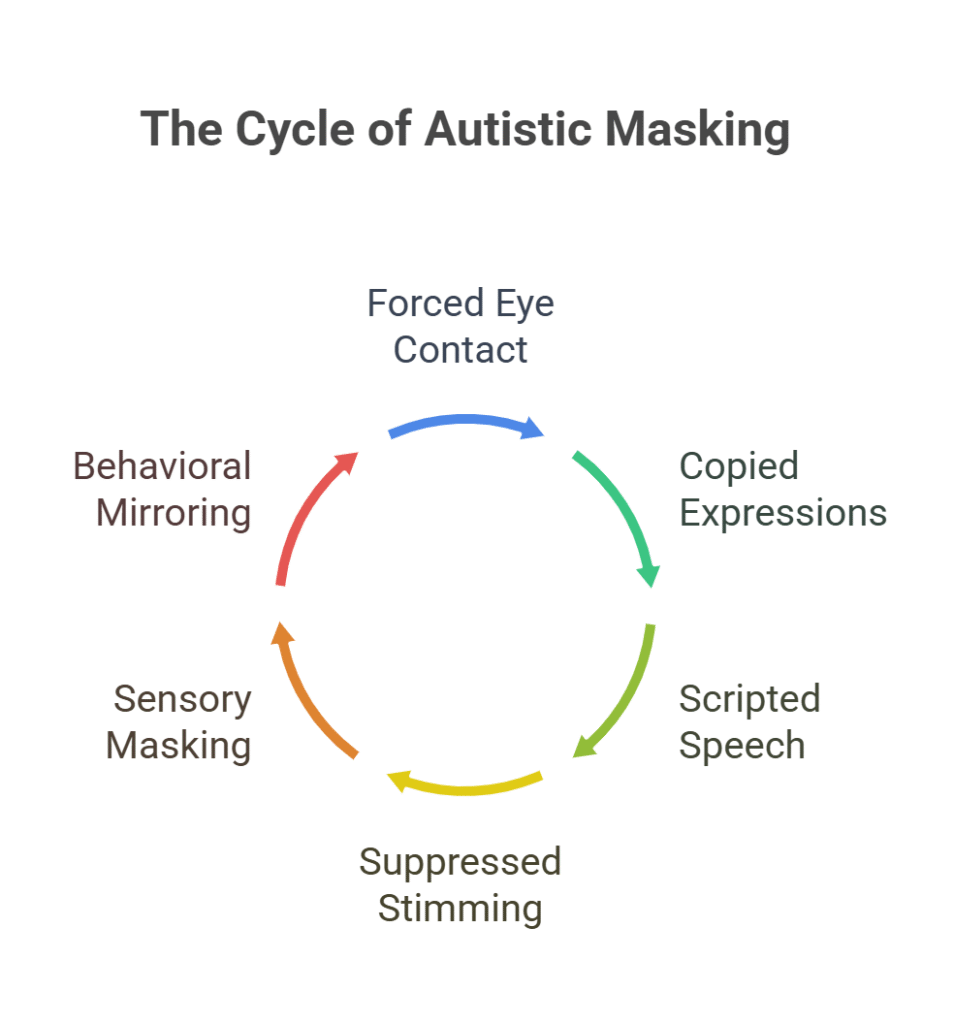
Common signs and examples of autistic masking include:
- Forced eye contact: Despite discomfort, many autistic people maintain eye contact to seem “engaged.”
- Copied expressions: Rather than reacting naturally, some mimic the facial expressions or tone of those around them.
- Scripted speech: Conversations may rely on rehearsed phrases or imitated speech patterns.
- Suppressed stimming: Soothing movements are often hidden or redirected to socially acceptable behaviours.
- Sensory masking: Discomfort from noise, lights, or smells is masked to avoid being labelled as difficult.
- Behavioural mirroring: Adopting mannerisms or interests of others as a way of fitting in.
These adjustments differ significantly from typical social adaptation. For autistic people, autism masking involves sustained effort, constant self-monitoring, and significant cognitive load.
Over time, this mental load chips away at energy, wellbeing, and identity. While others may see someone thriving, they may be experiencing autistic exhaustion behind the scenes.
This naturally raises the next question.
Why Autistic People Mask: Pressures, Fears, and Survival Strategies
Masking is not about pretending to be someone you’re not. It is about trying to stay safe in a world that often misunderstands or punishes differences. These choices are shaped by both external expectations and internalised beliefs.
Autism Masking at School and Work: The Pressure to Conform
From a young age, autistic children are encouraged to behave in ways that feel unnatural. At school, they may be praised for being quiet or sitting still, even if those actions require immense effort. As autistic adults, similar expectations persist in the workplace.
To appear professional, people feel pressure to suppress their discomfort.
Camouflaging Autism Traits to Feel Safe
Masking often arises from a need to avoid bullying or social rejection. It can help people form connections, especially when past experiences of exclusion have made authenticity feel unsafe.
Internalised Ableism, Shame, and Self-Suppression
Over time, societal messages that difference is unacceptable become internalised. This can lead to self-doubt, deep shame, and the belief that autistic masking is the only path to acceptance. For many, it becomes so routine that they no longer recognise the mask they are wearing.
Surviving, Not Thriving: The Cost of Constant Masking
Masking can help navigate social expectations, but it is not sustainable. It prevents people from expressing needs and builds up emotional debt that can lead to a crisis.
The real question is not why people mask, but what needs to change so they no longer feel they have to.
The Mental Health and Emotional Costs of Autistic Masking
The emotional labour of masking takes a significant toll. Many do not realise the damage until their body or mind begins to break down.
Constant Effort, Constant Exhaustion: The Daily Toll of Masking
Masking turns everyday interaction into performance. Monitoring speech, body language, and reactions requires sustained attention, leading to fatigue and anxiety.
Identity Loss: When Masking Blurs Who You Really Are
Years of masking can blur the line between the true self and the socially acceptable version. Many late-diagnosed autistic adults describe confusion about who they really are.
Physical Symptoms: When the Body Keeps the Score
Masking can also cause:
- Chronic fatigue
- Difficulty sleeping or relaxing
- Shutdowns, where the mind and body temporarily shut down from overload
These are not signs of weakness, but responses to chronic stress.
Autistic Burnout: Long-Term Symptoms and Recovery
Long-term autistic masking may result in autistic burnout a profound exhaustion that affects mental, physical, and emotional functioning simultaneously. Autistic burnout recovery can take months or years, often requiring a significant reduction in social demands and expectations.
Burnout is often misunderstood because it doesn’t always look dramatic. But its effects can be debilitating.
How Autistic Masking Delays Diagnosis and Support
One of the harshest consequences of masking is how effectively it hides the need for support. When someone appears calm or capable, others assume they are managing.
Why Clinicians Often Miss Autism in People Who Mask Well?
Professionals often miss signs of autism in individuals who mask well. Eye contact, small talk, and employment can create a misleading image of capability.
The ‘Too High-Functioning’ Myth and Why It’s Harmful
Many are told they seem “too high functioning” to be autistic. These labels overlook how much effort goes into appearing that way.
Overlooked at School and Work: When Coping Masks Struggle
At school or work, those who mask may never be flagged for help. But appearing to cope is not the same as coping.
Suppressing Autistic Traits Doesn’t Erase the Underlying Need for Support
Suppressing discomfort doesn’t erase it. It simply makes it harder to articulate. Over time, many lose confidence in their ability to seek help.
Unmasking Autism: What It Means and Why It Takes Time
Unmasking is the process of reducing or letting go of behaviours used to hide autism traits. For many, it begins after a diagnosis or period of reflection.
Relearning Who You Are After Years of Autistic Masking
Unmasking is not simply stopping certain behaviours. It is rediscovering preferences, reactions, and ways of expressing oneself. This can be a slow, emotional journey.
The Risks of Unmasking in Unsupportive Environments
Being authentic is not always safe. Many environments are unwelcoming. People who unmask risk misunderstanding or exclusion.
Finding Safe, Affirming Spaces to Unmask
Unmasking is only possible in spaces that allow for difference. Trusted relationships, inclusive communities, and flexible environments all help make unmasking safer.
Energy Management: How Unmasking Frees Cognitive Capacity
Unmasking also helps with energy management. Using metaphors like Spoon Theory, autistic people describe how unmasking frees up energy that was spent on performance, allowing it to be used more meaningfully.
Why Is Autistic Masking More Common in Women and AFAB People?
Autism research has historically focused on males, which led to diagnostic criteria that overlooked others. Many autistic women and AFAB individuals are diagnosed late, if at all.
How Early Socialisation Encourages Girls to Mask Autistic Traits
From a young age, girls are often encouraged to be polite and nurturing. Traits like fidgeting or avoiding eye contact are labelled as shyness, not neurodivergence.
Why Women Mask More Thoroughly: Research Evidence
Research shows that women and AFAB individuals often mask more thoroughly. They may be better at scripting, mimicking peers, and suppressing traits, which makes diagnosis harder.
The Hidden Impact of Autism Underdiagnosis in Women
Without a diagnosis, people are often left unsupported. Some only discover they are autistic after years of struggle. The relief of diagnosis is often accompanied by grief for time lost.
Why We Need to Stop Expecting Autistic People to Mask
Masking is not a personal flaw. It is a survival response to a world that demands conformity. The solution is not to improve masking, but to change the environments that make it necessary.
Systemic Change, Not Individual Performance: What Inclusive Environments Look Like
Education: Train teachers to spot masked behaviours and build inclusive classrooms.
Media: Portray autism more accurately and diversely.
Healthcare: Listen to lived experience, not just diagnostic checklists.
Policy: Expand protections and make reasonable adjustments the norm.
When inclusion is built into the system, autistic people no longer have to sacrifice wellbeing to be accepted.
How Can Allies Support Autistic People Who Are Masking?
If you want to support autistic people, focus on reducing the need to mask.
Notice the Signs
Masking can make people appear fine when they are not. Learn to recognise inconsistencies between public behaviour and private well-being.
Challenge Social Expectations
Avoid complimenting someone for “not seeming autistic.” Instead, validate their authentic self.
Respect Needs
Whether it’s stimming, written communication, or sensory tools, support what helps someone regulate.
Create Affirming Environments
Promote rest, flexibility, and sensory-friendly spaces. Invite openness rather than expecting conformity.
Unmask Discomfort
Support involves examining your own reactions and being willing to grow. Inclusion starts when we stop expecting others to perform just to belong.
Final Thoughts
Autistic masking is a response to unmet needs and social pressure. It is not weakness but it is exhausting. Every autistic person deserves to live as they are, not as the world expects them to be.
Masking can look like strength, but it often comes from fear. Real strength lies in being accepted without the need to hide who you are. If you mask, you are not alone.
If you are an ally, your role is to listen, create space, and advocate for meaningful change.
And if you’re wondering what to do next, start here: Take an autism screening at autismdetect.co.uk.
Frequently Asked Questions
What Is Mimicking in Autism and How Is It Related to Masking?
Mimicking is a type of masking where autistic people copy how others act, such as their facial expressions, gestures, or speech style, to avoid standing out. It’s often a learned way to handle social expectations and feel more accepted.
At What Age Does Autistic Masking Start in Children?
Masking can begin surprisingly early. Some children as young as preschool age may start changing how they act in response to social pressure. It usually becomes more noticeable in primary school when fitting in with peers starts to matter more.
What Is the Mirror Test for Autism?
The mirror test is a psychological experiment that looks at whether a person can recognise themselves in a reflection. While not specific to autism, it’s sometimes mentioned in discussions about self-awareness and developmental milestones.
Can Autistic People Stop Masking Completely?
Unmasking autism is possible, but it rarely happens overnight. Most autistic people reduce masking gradually, as they find environments, relationships, and communities where they feel genuinely safe. With the right therapeutic or peer support, it becomes progressively easier to express authentic autistic traits without the constant pressure to adjust or conform.
How does autism feel from the inside?
Many autistic people describe feeling different without always knowing why. Everyday experiences can be intense; noises might feel too loud, lights too bright, or routines too easily disrupted. Social situations can be confusing or draining, especially when it’s hard to read others’ emotions or expectations. Processing information might take more time, and unexpected changes can trigger stress or anxiety. But autism also comes with unique ways of seeing the world, noticing details others miss, and deep interests that bring comfort and joy.