Sports and autism. Two words that don’t always appear in the same sentence, but maybe they should. For many families and professionals living life on the spectrum, sports can feel like unfamiliar territory.
Is it helpful?
Overstimulating?
Inclusive enough?
Or just another battle in a week already full of them?
The truth is, sport doesn’t need to mean noisy locker rooms or chaotic team drills. It can mean calm laps in a swimming pool. Quiet focus on a yoga mat. The steady rhythm of a tennis ball against a wall.
For autistic children and adults alike, the right kind of sport isn’t just possible; it can be genuinely transformational.
This guide explores the facts, addresses common myths, and offers a grounded look at how sports for autistic kids and adults can support physical, social, and emotional wellbeing when approached thoughtfully. It’s not about turning autistic children into athletes. It’s about helping them feel safe in their own bodies, connected in their own ways, and confident in movement on their own terms.
Why Sports Matter for Autistic Children and Adults?
Sport, when approached with care, goes far beyond physical fitness. Research increasingly shows its value as a multi-layered developmental tool for autistic children and adults alike.
At the most basic level, regular physical activity supports coordination, cardiovascular health, and strength. But for autistic children especially, the benefits of sports often reach deeper:
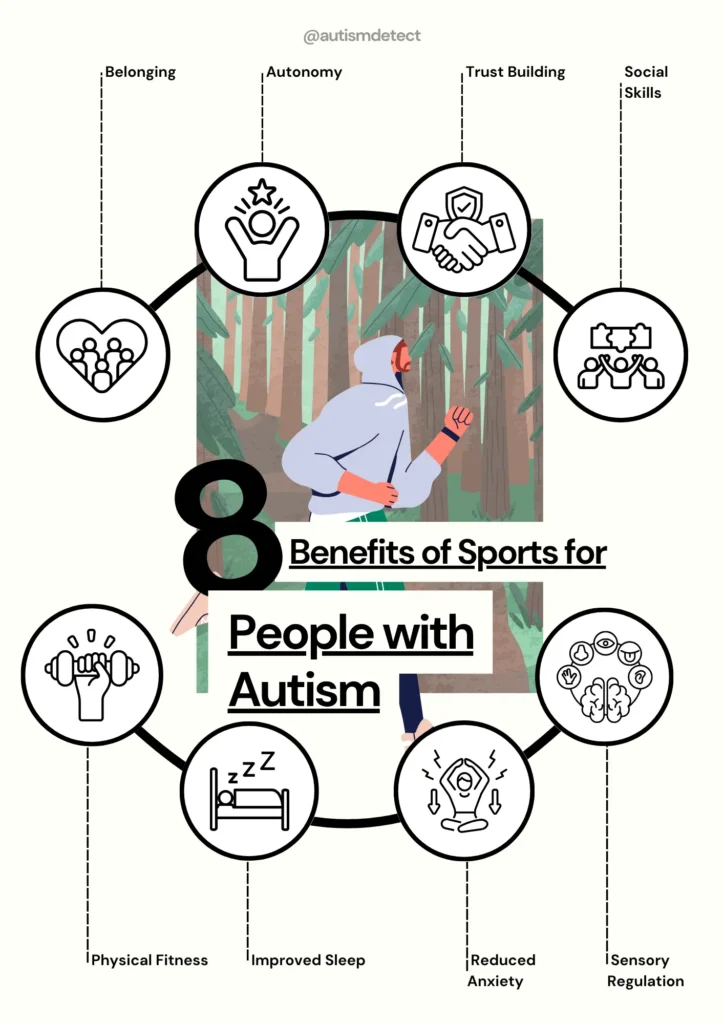
- Better sleep patterns
- Reduced anxiety
- Improved sensory regulation
Movement activates systems in the brain tied to focus, emotional control, and even language development.
More than that, sports for autism can offer a quiet space for big learning. Not academic learning, but learning how to wait a turn, read body language, or manage the unexpected. These lessons don’t always land in the classroom, but they can emerge naturally during a horse-riding session or martial arts class.
Slowly, and with repetition.
The key is removing the pressure and pace that often make sport inaccessible. When designed to respect sensory needs, communication styles, and individual rhythms, sport becomes something else entirely a tool for trust-building, autonomy, and genuine belonging.
What Are the Benefits of Sports for Autistic Kids and Adults?
Sports for autism offer far more than physical exercise. For autistic individuals of all ages, the right activity can strengthen the body, support social growth, and bring calm to an overwhelmed mind all through carefully chosen, consistent movement.
Building Motor Skills and Physical Confidence Through Sport
Many autistic children experience coordination difficulties or low muscle tone, which can make everyday movement more effortful. Sports for autistic kids offer a structured, low-pressure way to build physical skills progressively.
Repetition improves balance, posture, and body awareness. Confidence and enjoyment often follow.
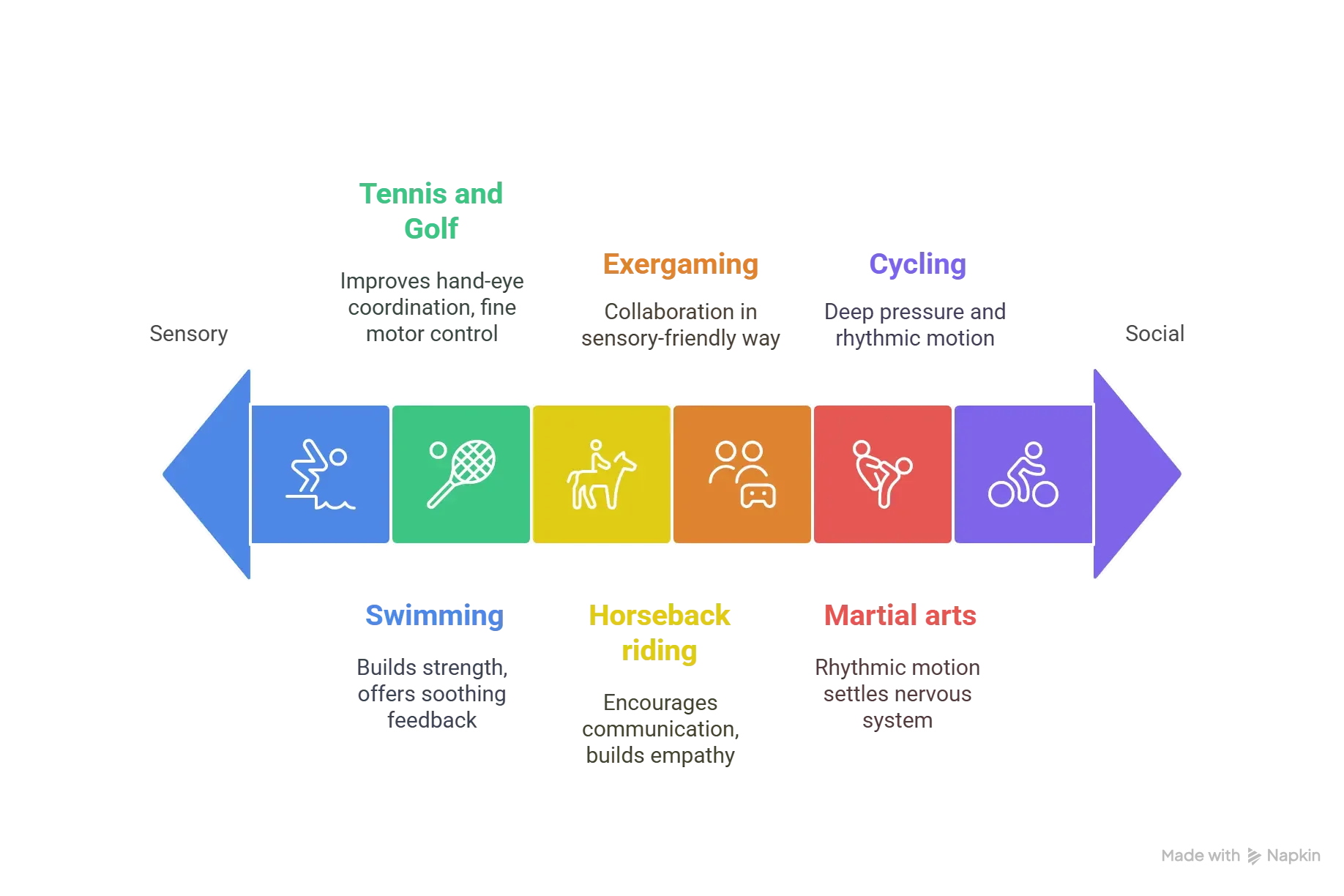
Swimming, for example, builds strength while providing soothing sensory feedback. Tennis and golf support hand-eye coordination and fine motor control. Both are predictable and low-contact, which helps reduce anxiety around unexpected physical contact or movement.
Building Social Skills Through Sports for Autistic Kids
Group sports and activities can create safe spaces for autistic children to practise social interaction. In sport, social cues often happen side by side rather than face to face, which many autistic people find more manageable.
Horseback riding encourages communication between child and animal, building empathy and patience naturally. Exergaming interactive fitness games let players collaborate or compete in a sensory-friendly environment.
These options support shared attention, turn-taking, and following rules without the sensory or social overload that traditional team sports can bring.
Sports Help Calm the Mind and Body in Autism
For many autistic people, movement is more than physical it is regulatory. Sport can support emotional regulation and help reduce challenging behaviours, largely through proprioceptive input: the sensory feedback that helps the brain understand where the body is in space.
Martial arts, cycling, and climbing offer deep pressure and rhythmic motion that help settle the nervous system. Research links these activities to better sleep, lower anxiety, and fewer meltdowns. The key is consistency and individual choice letting the autistic person set their own pace and preferences rather than following a fixed schedule.
What Challenges Do Autistic People Face in Sports?
While sports can be deeply rewarding, they are not always accessible without the right support. Many autistic individuals face barriers that make traditional athletic settings difficult to navigate. These challenges are commonly tied to sensory processing, motor coordination, and the social pressure that comes with competition, including autism and competitiveness dynamics that are rarely discussed openly.
Understanding these hurdles is the first step to creating more inclusive, autism-friendly sports environments.
Sensory Sensitivities in Sports: Managing Overload for Autistic Children
For some autistic people, sports settings can feel overwhelming. Bright lights, loud whistles, echoing gymnasiums, and crowded sidelines may all contribute to sensory overload. Many parents (of autistic children), and caregivers report that unpredictable environments and high-volume noise can trigger distress or meltdowns. Even well-meaning cheers from a crowd can be challenging when the brain is already working hard to process and filter input.
Motor Planning, Coordination, and Muscle Tone Challenges in Autism
Many autistic children experience dyspraxia, which affects coordination and timing. Team sports often rely on fast decision-making and fluid body movements, making them hard to manage. Poor muscle tone can add fatigue or frustration.
Individual activities like archery, swimming, or martial arts allow participants to move at their own pace and focus on personal progress.
Communication Overload and Social Anxiety
Fast instructions, constant feedback, and group dynamics can lead to communication burnout. Autistic individuals may struggle to process verbal cues in real time particularly in high-energy competitive environments like basketball or football where autism and competitiveness pressures collide. This mismatch can result in withdrawal, frustration, or abandoning the sport altogether.
Programmes that prioritise clear, paced instruction, visual cues, and smaller group sizes tend to see significantly better long-term engagement and enjoyment.
What Adaptations Make Sports More Accessible for Autistic Children and Adults?
Autistic children and adults often thrive in sports environments designed to match their sensory, motor, and communication needs. By making thoughtful adaptations, sports for autism can become a safe, enjoyable part of daily life rather than a source of stress or avoidance.
The key principle is simple: shape the space, the coaching style, and the activity around the person, not the other way around.
Sensory-Friendly Spaces
Reducing sensory overload is a powerful first step. Simple changes such as using noise-dampening balls, switching off fluorescent lights, or adjusting background noise can make a dramatic difference. Some programs also offer designated “cool-down” zones where children can reset when overstimulated.
These small shifts help prevent meltdowns and support longer participation.
Supportive Coaching
Coaches who understand autism can have a lasting impact. Techniques rooted in Applied Behaviour Analysis (ABA), like task analysis and visual schedules, offer structure and clarity. Video modelling can show what to expect before a session begins. When paired with consistent, one-on-one feedback and positive reinforcement, this approach can double engagement and retention.
Choosing the Right Sport
Not every activity suits every child, and that’s entirely normal. When choosing sports for autistic kids, parents and coaches should focus on activities that are low in verbal demand, predictable in routine, and rich in proprioceptive input. Swimming and martial arts are frequently recommended by therapists and autism specialists due to their structure, sensory benefits, and individual focus.
Matching the sport to the child’s sensory profile, interests, and energy levels builds genuine confidence and long-term motivation.
What the Autistic Community Says About Sports and Participation
Understanding what works best for autistic individuals starts with listening to their lived experiences. Across autism and sports communities, autonomy, flexibility, and gradual exposure consistently emerge as the keys to meaningful, lasting participation.
What Autistic People & Parents Say
Autistic individuals and their families often highlight the importance of autonomy in sports. Insights from Autism communities on Reddit and Facebook show that when children can self-select their activities, they are more likely to engage and enjoy the experience.
Allowing personal choice and respecting preferences increases long-term participation and motivation, creating an environment where the individual feels in control.
Gradual Exposure & Flexibility
A one-size-fits-all approach doesn’t work for autism. Gradual exposure to sports often for over 6 to 8 weeks helps ease the transition, reducing anxiety while building confidence. Instead of emphasising competition or perfection, focusing on trying, enjoying, and experiencing helps autistic children feel successful, even if they aren’t excelling in traditional ways.
Conclusion
Autism and sports don’t need to look the same for everyone. Sport doesn’t need to be loud, fast, or competitive to be meaningful. For autistic individuals, the true value lies in how well the activity meets their unique needs, supporting sensory regulation, encouraging social growth, and building confidence in movement.
With the right adaptations, inclusive coaching, and above all, patience, sports for autism become a platform for trust and genuine self-expression. When families and communities listen to autistic voices, prioritise gradual exposure, and respect individual preferences, participation grows not just in numbers, but in quality and enjoyment.
In the end, it is not about scoring goals or earning medals. It is about helping autistic children and adults find comfort in their bodies, joy in movement, and a sense of belonging through activities that honour who they are. Every step, swim, or stretch is a win when sport becomes a space for growth, regulation, and real connection.
Frequently Asked Questions
-
What famous athlete has Autism?
Anthony Ianni is a well-known example. Diagnosed with autism as a young child, he went on to play college basketball at Michigan State University. He became the first known autistic Division I basketball player and has since become an advocate for autism awareness, showing that inclusion in sport is not only possible but powerful.
-
Which martial art is best for autistic individuals?
Martial arts that emphasise structure, repetition, and body awareness tend to be a good fit. Many families report positive experiences with disciplines like karate, judo, capoeira, and jiu-jitsu. These activities provide predictable routines and clear physical boundaries. That said, martial arts may not be suitable for children who struggle with aggression or impulse control, so it’s important to match the activity to the individual’s needs.
-
What is an autistic passport?
An autistic passport is a personal document that helps communicate a person’s sensory preferences, communication style, and support needs, especially in health and public service settings. While not directly linked to sport, it can be helpful when enrolling in new activities or working with unfamiliar coaches, as it provides quick, essential context for inclusive practice.
-
Do any Olympic athletes have autism?
Yes. For example, Chris Morgan, a decorated Australian rower, has spoken openly about being autistic. He attributes his attention to visual detail and focus as strengths in competition. Stories like his are a reminder that neurodivergence and elite performance can absolutely coexist.
-
How long should a sports program run before results show?
At least 12 weeks, 3 sessions per week, with 60-minute durations yields the most consistent outcomes.